Stuck making monsters that look pasted together? Creature design works when anatomy serves a function: decide what the animal does, then build the body that does it.
This guide sits within our wider concept art coverage and focuses on how bodies, behaviour and invention fit together.
| Item | Value |
|---|---|
| Convergent evolution | Independent evolution of similar features in unrelated species |
| Shark and dolphin example | Similar structure from adaptation to aquatic life |
| Experts interviewed by Creative Bloq | Five creature artists |
| Ed Binkley’s teaching career | 30 years of figure drawing and concept art |
Figures come from Lancaster University’s glossary and Creative Bloq’s May 2026 feature. They can change, so check the sources before you rely on them.
Why anatomy comes first in creature design
Viewers may not name what is wrong with a weak creature, but they feel it. Limbs that cannot carry the body, or a jaw with no muscle behind it, break the illusion at once.
Creative Bloq puts the risk plainly: “Stray too far from realistic anatomy or what’s physically possible and your designs won’t hold up.” That is the working rule for everything below.
Educator Ed Binkley, who taught for 30 years, goes further. He says “a fantasy artist cannot alter or distort anatomy convincingly, human or otherwise, without knowing anatomy and body mechanics thoroughly.”
Start from function, not from the cool shape
A body is a set of answers to problems: how it moves, eats, hides, defends and breeds. Write those answers down before you draw.
A short brief keeps the design honest. Try these prompts:
- Where does it live: water, canopy, desert, cave?
- What does it eat, and how does it catch or process it?
- What hunts it, and how does it escape or hide?
- How does it move at speed, and how does it rest?
- How do young survive and grow?
Each answer suggests a feature. A hunter in open ground wants long legs and forward-facing eyes, while prey wants wide vision and a quick start.
Try a worked example. Imagine a creature that grazes on cliff ledges. It needs strong grip, a low centre of gravity and eyes that watch for drops, so you might give it broad splayed hooves, short sturdy legs and a compact torso.
Now push the idea. If the cliffs are wet, perhaps the hooves are soft and ridged. Each choice came from the environment, so the result reads as designed by nature rather than by a committee.
Behaviour deserves the same attention. A solitary ambusher and a herd animal carry themselves differently, and posture, colour and size all follow from that social life.
Borrow from real animals, not from other designs
Real animals are the best library you have. The Creative Bloq feature quotes one artist warning that “Some artists lean heavily on design tropes they have seen without understanding what the original reference point was.”
The fix is to go back to the source. Study skeletons, muscle groups and how joints bend in living species, then recombine those ideas.
The same feature quotes an artist praising Wayne Barlowe, Arthur Rackham, Terryl Whitlatch and James Gurney, who are “always looking at anatomy references when they work.” Even the experts keep reference open while they draw.
A practical method is to pick one real animal for the skeleton, another for the way it moves and a third for surface texture. Blend them loosely, then correct the result against your function brief.
Avoid the trap of a simple mash-up, such as a head from one animal on the body of another. Joints, spine and weight distribution must still agree, or the parts will fight each other on the page.
Keep a habit of quick studies from life or photographs. A short study of how a heron folds its legs teaches more than a long session copying a finished monster.
Use convergent evolution as a design shortcut
Convergent evolution is defined by Lancaster University as “the independent evolution of similar features, structures or functions in unrelated species or other taxonomic groups due to living in the same kind of environment.”
The glossary’s example is that the shark, a fish, and the dolphin, a mammal, share similar structure because they “evolved independently as adaptations to aquatic life.”
For a designer this is permission and a constraint. If your creature lives in open water, a streamlined body is believable. If it lives in a new environment, ask which solutions unrelated animals reached there.
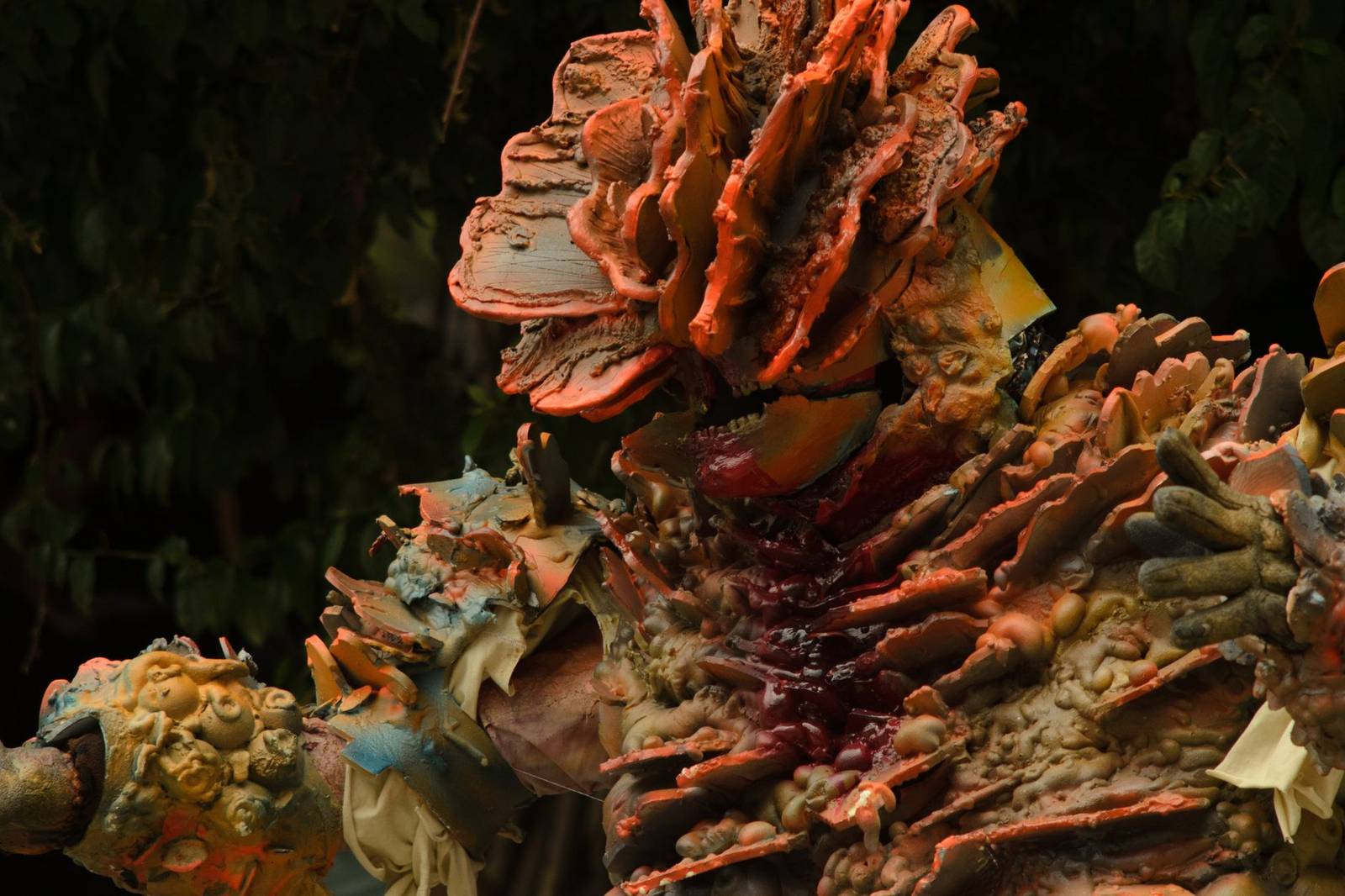
It also helps with alien worlds. When a planet has different gravity or atmosphere, ask what an animal there must still solve, such as support, breathing and movement, and let those problems shape the body.
Be careful with the idea, though. Similar features do not mean shared ancestry, so avoid treating look-alike creatures as close relatives in your world notes unless you intend it.
Invent with limits: silhouette, gesture and detail
Once the logic works, invention is safe. Change proportions, add an organ or swap a limb type, but follow each change through to its consequences. An extra pair of legs needs suitable supporting anatomy, muscle and a reason.
The Creative Bloq feature quotes an artist saying “Form and silhouette are the most critical aspects of a successful design, whereas details glue everything together.” Settle the silhouette first, then add surface detail.
Gesture matters as much. In the same piece, an artist calls it “the real ‘secret’ to the anatomy looking alive; it’s the difference between an accurate anatomy chart and the illusion of a sentient being.”
Test readability by shrinking the sketch or filling it with flat black. If you can still tell what the creature is, how it moves and whether it is dangerous, the silhouette is working.
Common mistakes are easy to spot once you look for them:
- Decoration with no purpose, such as spikes that would injure the animal itself.
- Limbs attached with no shoulder or hip structure to move them.
- Identical textures across the whole body, which flatten the form.
- Stiff, symmetrical poses that look like a chart rather than a living animal.
Fix these by returning to the brief. If a feature cannot be justified by habitat, diet or behaviour, simplify it or cut it.
Fitting creatures into a production pipeline
Creature work rarely stands alone. It slots into the concept art workflow, from loose thumbnails to refined sheets that others can build from.
Gear and weapons the creature carries or wears belong to prop design, so a rider’s saddle or a monster’s harness should match the body you have already worked out.
Clear sheets help the people downstream. Show front, side and back views, a few key poses, and notes on scale and colour so modellers and animators do not have to guess how the anatomy works.
A repeatable order of work keeps you from jumping to detail too early:
- Write the habitat and behaviour brief.
- Gather reference from real animals.
- Explore silhouettes in quick thumbnails.
- Check the skeleton and joints for the chosen movement.
- Add gesture, then surface detail.
Frequently asked questions
Do I need to learn real animal anatomy?
Show answer
Yes. Working artists quoted by Creative Bloq say convincing invention rests on studying real anatomy and keeping reference close.
What is convergent evolution in creature design?
Show answer
It is unrelated species evolving similar features in similar environments, which gives you proven solutions to borrow for a new habitat.
Should I design the silhouette or the details first?
Show answer
Silhouette first. One artist in the Creative Bloq feature calls form and silhouette the most critical aspects, with details gluing the design together.
How do I avoid copying other artists’ monsters?
Show answer
Go back to the real animals and structures behind the tropes, then recombine them to suit your creature’s habitat and behaviour.